

Follow me on Twitter: @FromKulak

Disclaimer: At no point in this piece do I ever advise, instruct, or make known the means of making explosives (this knowledge I leave to Wikipedia, Youtube, and other unsavory parts of the web).. Nor do I discuss the fine processes of how to make Complex incendiary devices or fuels in detail sufficient to actually do so (I strongly encourage anyone interested in pyrotechnics to do extensive research and take professional courses, as even very simple non-explosive incendiaries can be incredibly dangerous to work with in even small quantities) which in the US and some other countries are not-regulated, whereas others are highly regulated under the US National Firearms Act not as explosives, but as destructive devices (Its weird), whereas in other countries they DO have stringent regulation (nor is this legal advise)… The purpose of this piece is to discuss a set of hypothetical improvised non-explosive anti-tank weapon’s systems and the tactics of their hypothetical employment. The details of how to go about actually creating the fuels, reactive agents, and dangerous chemicals will not be discussed here, except in such detail as is necessary to WARN against the various extreme dangers of hazarding to make them.
Neither the Author nor anyone at Anarchonomicon is a Pyrotechniques Expert, Chemist, Lawyer, EOD Technician, or Military Authority in any sense of those words that matter. And none of the hypotheticals discussed should be pursued without consultation with those qualified people.
By Contrast none of the TACTICS discussed should ever be pursued by anyone EVER who values their life or the lives of anyone around them… or at least certainly anyone who values them more than victory.
At the extreme limits of ultra-unconventional warfare, we leave the realm of the Guerrilla and other misspelt jungle animals. We instead enter into the domain of the CatGirl and stranger internet abominations.
This is CatGirl Warfare.
.
Not to be confused with Tactical Espionage Dollar-Store Hobo Warfare, Warlord-Librarian Warfare, Urban infiltration Warfare, or The War to The Knife.
It’s the CatGirl Cocktail Hour! Again!
In the Previous “CatGirl Cocktail Hour” we deep dived how Thermite based weapons, despite not defeating armor, could almost certainly be used in improvised and purpose built weaponry to cripple, mobility kill, blind, and cook off enemy armored vehicles, both for irregular forces and cut off or low-supply conventional infantry.
We also covered all the horrifying ways that aluminum powder, homemade thermite, and home metallurgy is a death trap, but still more accessible to cut off units and irregulars with limited skills and supplies than anything involving actual explosives or chemistry.
As well as just what a pain, coarse drop and spark safe thermite is to actually get ignited even under normal conditions, let alone combat.
As well as the uniquely horrifying dangers that fine aluminum dust is.
.
But what if you were a stupid evil monstrous asshole who didn’t care even about your own safety?
Or what if your enemies were stupid evil monstrous assholes who didn’t care even about their own safety?
.
You see throughout the piece, something kept cropping up… something unnerving.
Whereas achieving and lighting a safe to wield, non-explosive thermite mixture in a manner that’s not a danger to the operator, yet works is a multistep series of challenging enough judgment calls and processes, which I did not go into enough detail to teach (both because I lack the expertise, and also because you’ll inhale fine aluminum dust and die drowning in your own lungs and or get Alzheimer’s at 20)… Is actually rather difficult to do safely.
On the other-hand simply making fine aluminum powder that is horrifyingly dangerous to humans WITHOUT concern for safety… takes… almost no skill whatsoever.
Aluminum dust simply milled finer and finer with enough of a simple carbon or other coating to stop oxidization, will simply becomes more and more dangerous and more and more violently reactive… seemingly without limit.
The very process of milling fine Aluminum powder is a DEATH TRAP for the Pyrotechnic Expert since as the aluminum gets milled finer and finer, more of the bare unoxidized aluminum surface gets exposed and consumes the oxygen within the airtight mill (and it must be airtight to conceal the deadly neurotoxic Aluminum dust)… This means that within the mill the Aluminum VACUUM SEALS itself in by devouring all the oxygen in the air within the mill.
Thus if the mill is not “burped” every few hours. The Aluminum will fully vacuum seal and when you do open it the Oxygenated external air will rush in, causing some of the dust to get kicked up and suspend in the air, and then flash react now that the bare unoxidized aluminum is contacting oxygen so violently… Which is exothermic. Which will cause the suspended fuel-air mixture of the Aluminum powder to ignite… At 2000 degrees.
Many an amateur at pyrotechnics have basically hit themselves with a homemade 2000 degree thermobaric warhead to the face…. By doing nothing and just being slightly late opening an inert can. What’s in the box?
.
So what happens when someone inevitably decides to weaponize this simplest of heavy… “Ultra-Light” metal chemistry?
What happens if you bottle that? And hand-throw it at the enemy?
Don’t do this at home!
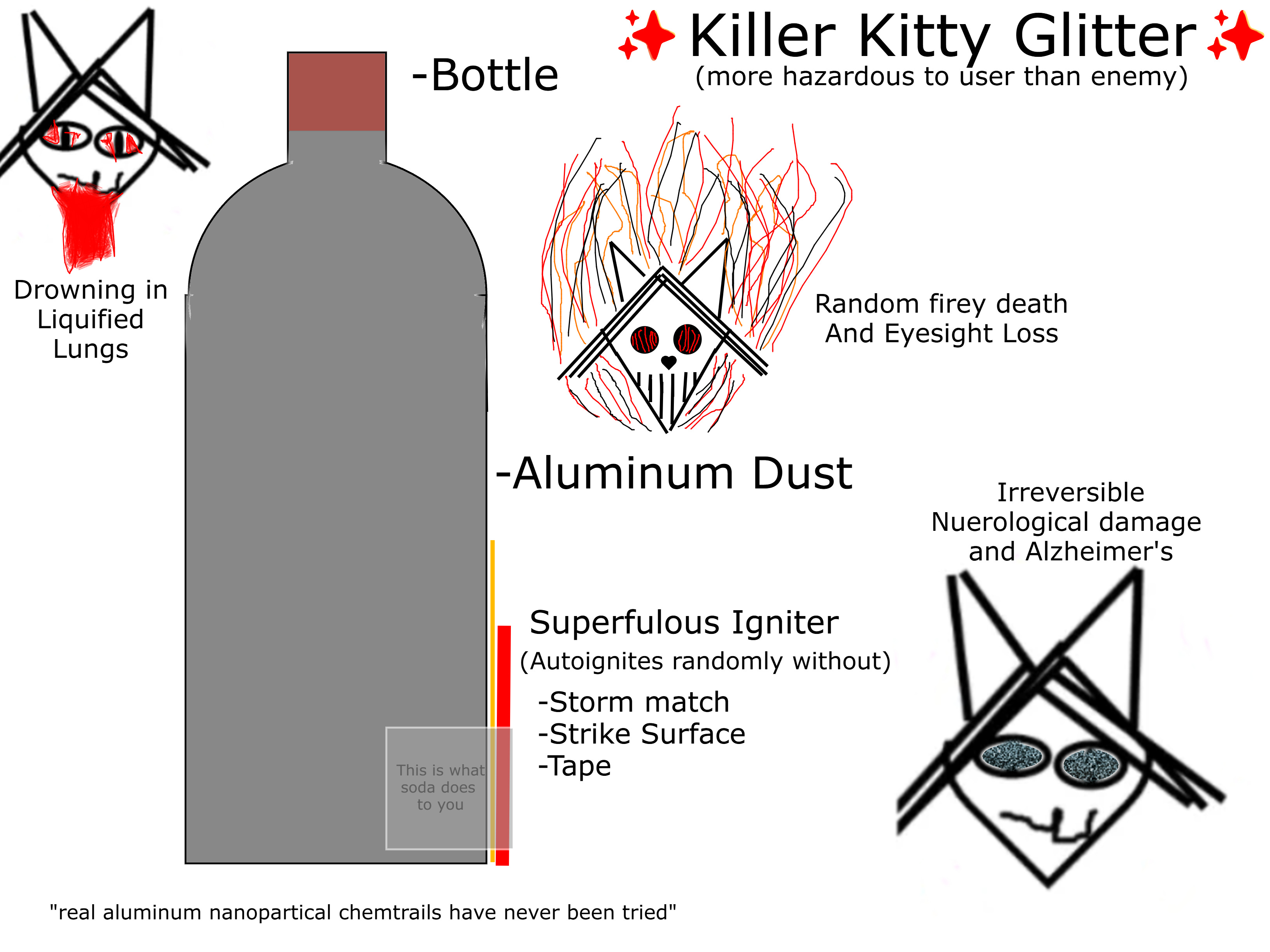
Legal Disclaimer: Note this is NOT an explosive. No element of this undergoes explosive reaction or even deflagration, rather this is a simple open-air combustion reactions which cannot even hypothetically be used to produce shrapnel or concussive explosive damage.
In theory (not legal advice) depending on the jurisdiction, it is in the same legal category as camping fire-starters and diagrams for how to build a campfire, maintain gas motors, metallurgical chemical welding equipment, and other examples of multi-element complex combustions used throughout hobbies and industry.
Likewise we advise against EVER creating any incendiary device… including camp fires (People fall into camp fires. They’re dangerous. This one time at PorcFest in New Hampshire a guy lost his junk after drunkenly falling into the campfire).
Remember The Purpose of this piece is to predict the future of warfare, hypothesize future weapon systems (much as many Military Magazines draw diagrams of hypothetical hovertanks, “Stealth Rifles”, “Plasma weapons”, etc.) Then Properly anticipate and advise the skilled military personnel who read this blog… And in the process horrifically deface the future of all Military History by CatGirl-Branding everything that hasn’t yet been safely named.
Killer Kitty Glitter: A Nightmare Someone Will Eventually Make
It the simplest thing ever. A glass bottle… Filled with aluminum. A single element.
Technically, this is less chemically complex than bottled water. (a TWO element molecule in a bottle)
You might not even need an ignition source if the aluminum is milled fine enough and you let it sit long enough… it’ll drain the oxygen in the bottle (oxygen binds to exposed metal, this is how rust happens), forming a vacuum in the bottle, and probably auto-igniting the moment it’s broken when fresh oxygen hits it. (this is a common danger of milling Aluminum)
However, for redundancy, and in accordance with the Geneva Conventions to avoid being accused of chemical warfare and purposeful poisoning enemy combatants with aluminum nanoparticle neurotoxins and lung contaminants, it is very important to include either a storm-match and strike surface taped to the bottle, flint and steel, or some sort of burning ignition source.
This will also guarantee that if one were to accidentally drop one you’d have a maximally painful but quick death of 3rd degree burns and lung searing misery instead of drowning in your lungs or suffering brain damage from inhaling an entire soda bottle’s worth of inert aluminum powder.
Remember kids, it’s not chemical warfare if the chemicals are on fire.
-Cadets Canada, Unofficial Moto
(The protocol on incendiary weapons only prohibits civilian targets and military targets near civilian concentrations)
“Ok” you might think. “But what does it actually do? What does it actually look like?”
It is here that, unlike the CatGirl Meltatini and its hypothetical ignition mechanisms and functionality… we don’t have to speculate…at all… as to the dangers or efficacy.
Fine Aluminum dust fires are shockingly common and well documented.
This factory was collapsing within a minute of one starting on their main machine, note the aluminum doesn’t even catch fire til 19 seconds with the blinding flash:
Suitably fine aluminum can even react with rain and water… Since water causes metals to rust at increased rates… Ie. Oxidize quickly. (H2O is 1 third Oxygen). Which we already know is extraordinarily exothermic when it happens to aluminum.
There are dozens and dozens of these videos out there, Fine aluminum dust (like all metal dusts) are common industrial byproducts of any milling or shaping of aluminum, so every aluminum product that comes out of a factory produces it as a byproduct. And such accidents are very very common… Just as all dust fires and “explosions” are. (look up grain silo explosions, or sugar refinery fires).
As already linked in the previous CatGirl Cocktail hour, Fine aluminum powder is also a very basic pyrotechnic ingredient to produce both thermite for industrial or Youtube purposes… or to make fireworks flash brightly.
I already linked this video of a talented if incautious Youtuber/Pyrotechnic hobbyist showing how ball mills (a motor, container, and glass marbles) can be used to refine aluminum scraps (foil, soda cans, wrecked motorcycle parts) down to dangerously fine dust particles which can combust in the air (or get sucked into your lungs and drown/lobotomize you).
Again don’t do this at home… Certainly not in your house.
.
But the wider phenomenon of dust fires… militaries have already weaponized elsewhere.
Thermobaric weapons or “Fuel Air Explosions”, “Aerosol Bombs”, or “fuel Air Bombs”, or “Vacuum Bombs” are an expansive category of weapons that exploits physics… And ambiguities in the English language.
Dust “Explosions” are not really explosions (some are, it’s weird). Remember how I said I’d never tell you how to make explosives, that instead you’d have to read chemistry Wikipedia and watch youtube videos like a man?
Yeah, none of what I’m talking about are explosives because the oxidizer does not exist in the fuel source and a net gas release isn’t happening… Remember Explosives detonate or deflagrate from oxygen already contained in the mixture (low explosives) or the molecular structure itself (high explosives). The explosive reaction results in the chemical powder mixture or the molecule itself reacting via combustion or shockwave (high explosive chemistry is finicky) breaking the old chemical bonds and rapidly forming new ones… One or all of which is a gas.
For example here’s the Nitroglycerin (a high explosive) Detonation reaction:
4 x C3H5N3O9 → 12 x CO2 + 10 x H2O + 6 x N2 + O2
That’s a ton of Carbon Dioxide, Water (steam), Nitrogen, and Oxygen molecules all being produced, all of them are gasses moving very fast at 5000 degree, as they leave the Nitroglycerin molecule. You can also sorta visualize why nitroglycerin is so unstable when it’s such a large molecule of viscous liquid, and all it takes to start the reaction is 4 of those molecules getting too close together (don’t bump it).
Just one of those large unstable molecules ripping against another, one CO2 or H2O molecule forming and ripping off… And the whole thing blows.
(amazing movie about transporting Nitroglycerin)
This is how most explosives work. (although most high explosives are vastly more stable)
The Oxygen within the mixture/molecule reacts with the combustible elements to release massive amounts of gas in a detonation, or a fast burning deflagration which can propel bullets, shrapnel, ect. to lethal speeds.
Gas is expanding at insane speeds. And that creates a shockwave that burns and crushes people nearby, and launches shrapnel and fragmentation at incredible speeds into the poor bodies of various targets.
.
This still can sortof happen in some weird types of dust fires and thermobarics (again weird exceptions abound)…
But far more common, and what we’ll be discussing today… Is the opposite.
Most dust and fuel air fires result from an unoxidized fuel with no innate oxidizer to it, getting spread by circumstance or a smaller explosion into a fine aerosol within the air, where suddenly it is evenly mixed with an oxygen source… The Air.
Thus things like Flour, or Grain, or Sugar or corn… Things that don’t even really burn that well on their own from lack of oxygen… Can suddenly burn terrifyingly in massive fireballs if they’re cast into the air and have the perfect mix of air to fuel.
.
When weaponized these are called Thermobaric Weapons or “fuel air explosives” (a primary explosive is used to scatter and ignite the fuel).
And these have a VERY interesting property.
.
Because the oxygen is NOT part of fuel but the atmospheric mix… gas is not released, but consumed.
These ““explosions”” don’t “Blow up”. They “Suck up”.
All the oxygen in the surrounding atmosphere gets consumed into the fuel elements of the reaction, creating a negative pressure wave that draws in more oxygen and air from the surrounding environment, consuming that, and (if done in a contained environment like a building or bunker or tunnel network) sucking the air OUT OF THE LUNGS of the enemy… Potentially collapsing the lungs (in theory) but more likely sucking the flames and burning negative pressure atmosphere into the lungs of the enemy.
And one of the most potent additives for Thermobaric weapons is….
You guessed it.
Aluminum.
.
4 x AL + 3 x O2 → 2 x Al2O3
Aluminum + Oxygen → Aluminum Oxide (Aluminum Rust)
Think of how much Atmosphere this is devouring! No gas is being released, but MORE oxygen Atoms are being devoured than Aluminum atoms.
Indeed it burns hot enough that it almost certainly rips oxygen atoms from other molecules. that atmospheric CO2 and CO (Carbon monoxide) have their oxygen atoms ripped from them only for the left over carbon to combust (as it does) and consume more atmospheric oxygen.
This doesn’t quite cause deep space type vacuums (there’s a lot more to air than oxygen) but it does draw the burning element outwards towards the air it is sucking in. And if you’ve ever interacted with a fire in your life you know that heat rises and thus fires draw in oxygen disproportionately from their BOTTOMS.
So what happens you toss Killer Kitty Glitter on TOP an enemy target… Like a tank? The bottle breaks, the dust is thrown out into the air, and then it ignites, and then…
What happens in the tank?
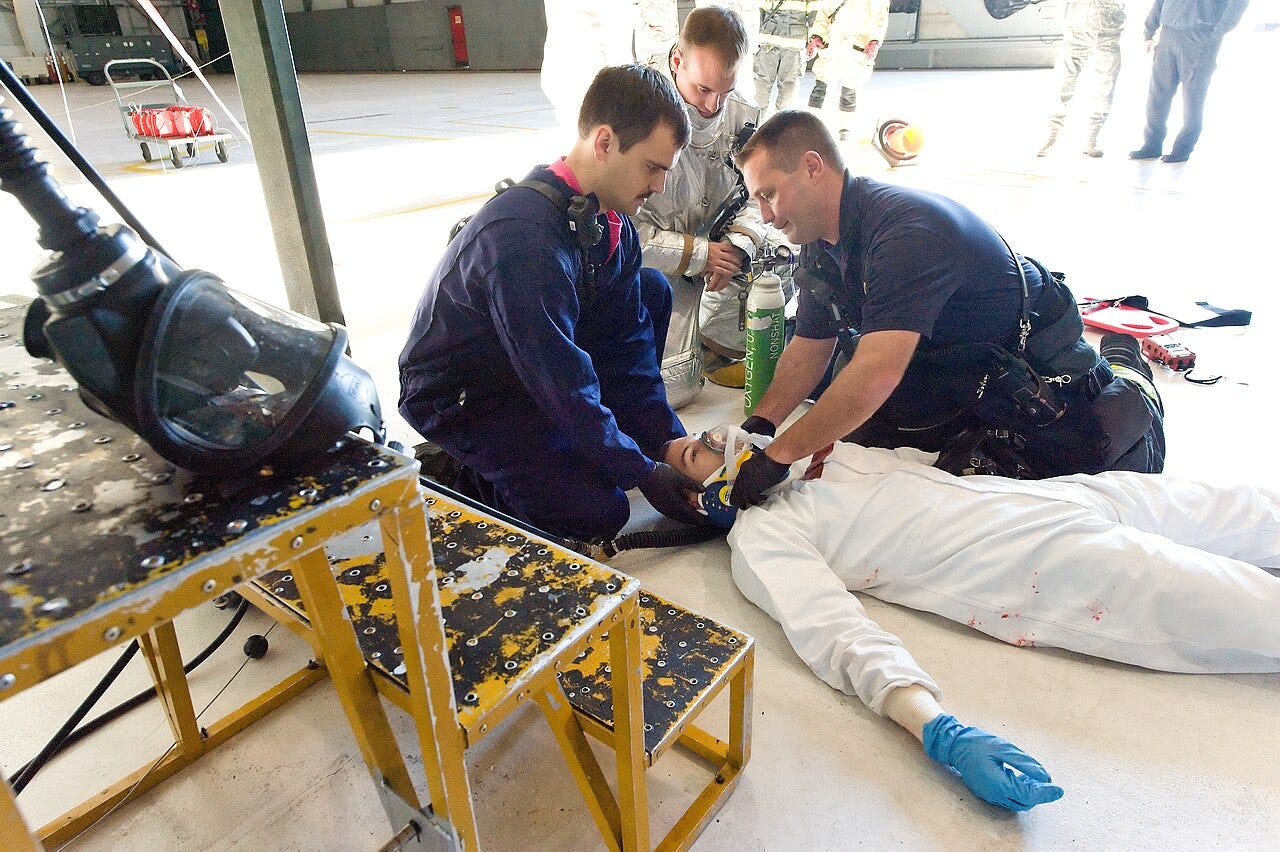
A Battle Tank is a Confined Space
Confined spaces are a category of occupational health and safety hazards that have killed many an unsuspecting repairman, farmer, sailor….
Some poor naive soul jumps in a grain silo, or crawls into a (cold) boiler to repair it, or descends into a watertight service hatch on a ship without a supervisor or backup or rescue plan… Then passes out and dies because the chemical finish on the inside of the grain silo or the anti-rust paint on the ship’s haul has off-gassed in the airtight environment and consumed all the available oxygen… Something which cannot be smelt or seen. And will only be felt when your lungs are already full of stale, but largely normal smelling air… but which has no oxygen in it, or is an obscene percentage carbon monoxide or some other poison. Killing the hapless worker. At which point one of their colleagues inevitably comes to check on them a few minutes later, notices that they’re unresponsive, assumes it is a medical emergency (not in the way you think)… Rushes to their aid… And then dies themselves from being overcome by the toxic gas.
This has killed THOUSANDS of ordinary workers. Sometimes this daisy chains killing 3 or 4 heroic would-be-rescuers dead before people stop rushing into the perfectly normal looking space.
Seriously this has killed thousands of industrial, farm, nautical, and ordinary facility workers. And is now one of the largest subsets of workplace health and safety concern (read the Wikipedia page).
It’s statistically plausible someone or several people reading this piece will die to a confined space death… Or rather would have, but for my benevolence and nagging.
The joint factors of a confined space, no easy emergency exits, no way to force fresh air, and the unexpected/hard to diagnose nature of the threat all combine with the chemistry of unusual reactions and often combustible materials to create death traps.
What thermobaric weapons do, and the reason they’re employed against enemy bunkers, tunnels, buildings, and hardened positions… Is they exploit all these factors that exist to lesser extents in defensive positions to create sucking fires that rapidly create burning zero-oxygen negative pressure confined death traps in what should be the enemy’s safest positions.
Yes just as those heroic Thetford farmers drowned in the zero oxygen Chicken shit tank, you can make your chicken shit enemies drown in the burning atmosphere of their Armored Tanks.
(I know. I know. Operating a Battle Tank is a dangerous job that’s highly exposed, with little concealment, and at extreme risk of enemy heavy weapons fire. Its unfair to merely compare the armor they have, vs unarmored infantry who can still better conceal themselves and employ cover… and there isn’t really a comparison one way or the other in bravery between them and infantry. But tell that to the poor dismounted units who have to hunt a Main Battle Tank.)
.
Remember how much Oxygen Aluminum devours when it burns?
We can calculate the Exact displacement of oxygen for Aluminum. Aluminum has a density of 2.7 g/cm3. Or 2.7 kilograms per liter. Or 0.959 Kilograms (just over 2 pounds) in a 355ml Beer Bottle.
Standard sea level air density (at 15c) is 1.2250 kg/m3.
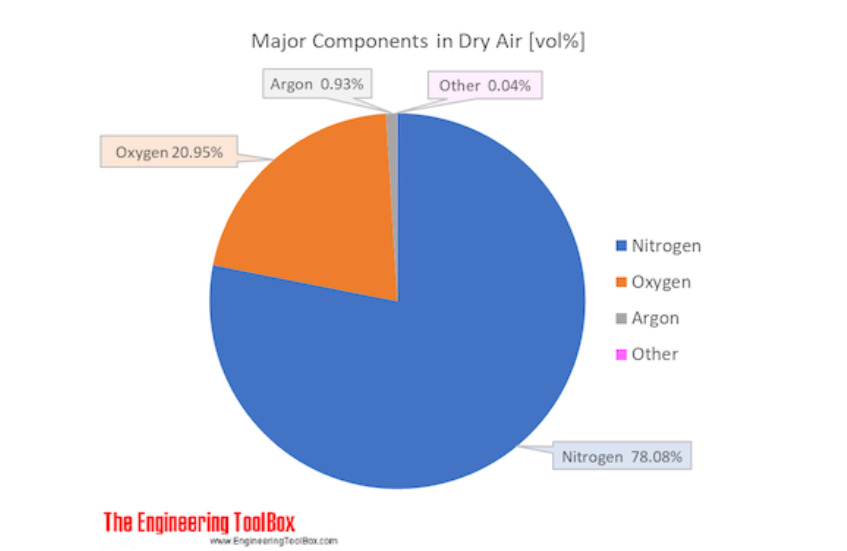
However Air is Mostly largely inert Nitrogen. Oxygen is only 20.95% of sea level air. And remember the Aluminum is binding to the oxygen at a ratio of 2 to 3. And there’s a ton of other things to do with atomic mass I really don’t want to get into.
BUT…
handwaving away all the actual math and eyeballing it. A single Beer-Bottle worth of burning aluminum powder, one basic Killer Kitty Glitter attack, is consuming somewhere between 5 and 7 cubic METERS of atmospheric oxygen.
A one liter bottle is consuming 15-20 cubic meters.
And a two liter 30-40 cubic meters.
.
So what happens when one lands on top of an enemy Main Battle Tank in sudden surprise with all of it’s hatches open “unbuttoned”, to let the Tankers, see, communicate, and breath in the surrounding air?
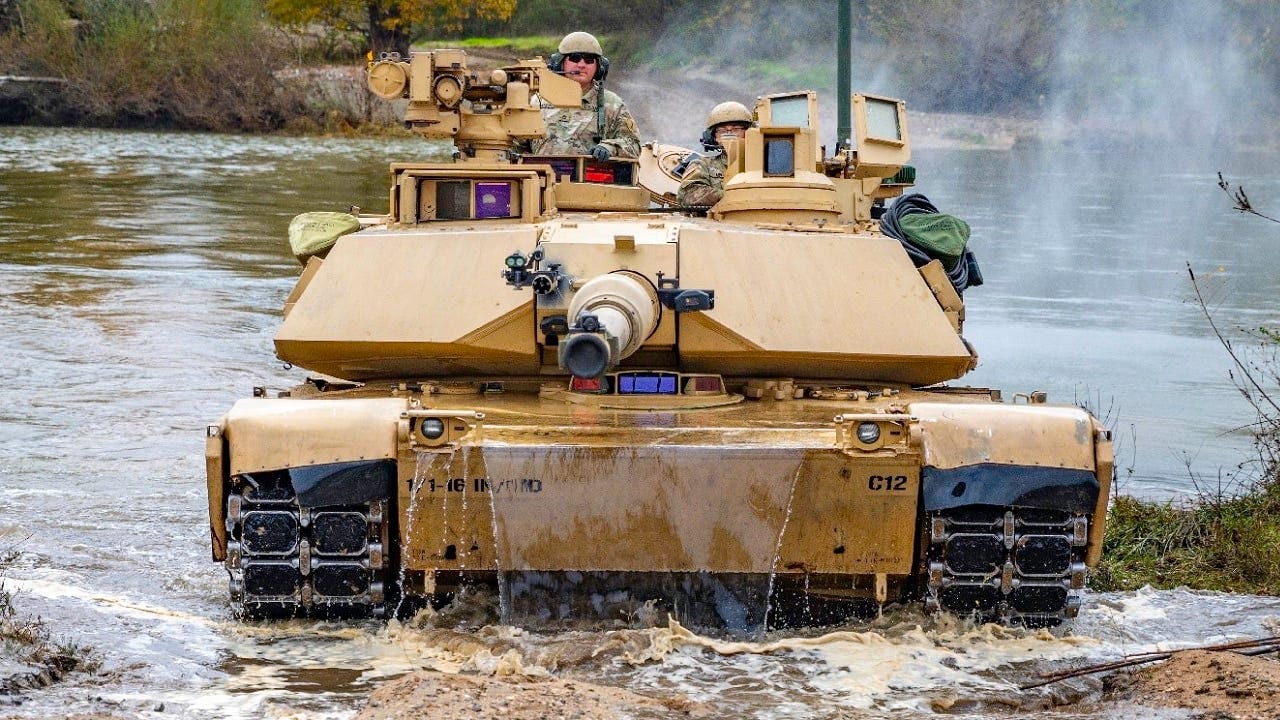
Note: I use the Abrams for all of my examples, not because I have a beef with Americans but because all of the sources are in English, and the Abrams is an example of a GOOD modern tank built to keep it’s occupants alive, whilst not going off concept into weirdness. If I focused on the T-90, Leopard, Challenger, Ariete, Leclerc, Merkava, Type-99, Ramses II, Arjun, or Al-Khalid I’d have to deal with non-English sources and weird exceptions… Whilst not really changing the concept… Also I’m not really a tank person, so researching tanks isn’t that enjoyable for me.
.
Tank commanders generally like to keep their Tank Unbuttoned. Whenever they’re not immediately in combat being able to stick their heads out, operate their smaller support guns, and just look around gives them an extraordinarily more complete and accurate view of the battlespace around them and radically improves their decision making, control, and ability to communicate with dismounted units around them. It also lets the air flow and keeps everyone cool (and looking cool).
As soon as they take effective fire however, what they’re (generally) supposed to do is everyone descend into the tank and seal those hatches so that small arms fire cannot kill or injure the personnel. Buttoning up.
Makes sense right?
The moment of vulnerability however is the split second before they go into buttoning up. Tank Troopers drill this a ton, and can do it extraordinarily fast… but they have to actually perceive they’re under attack, mentally process it, shout out to button up, get down into the tank, and pull the hatches shut.
If you get the surprise on them or catch them napping, that’s 5-10 second between your first attack on them, and them actually being safely buttoned up.
Traditionally though this is really only a vulnerability to Snipers. That if a skilled sniper spots an unbuttoned tank with the commander poking up… He can get 1 shot off that might kill one if he’s a good shot (you really want to know which is the commander and which the loader position when you take that shot)… Most other small arms fire, or even heavy weapons fire, the commander and gunner are down in the tank before the fire gets on target.
At which point they’re pretty safe even before the hatch closes (in 1-2 seconds) because small arms fire and shrapnel travel linearly… Which makes it really hard to get any of it going down the hatches and hitting the personnel.
For this reason Grenades, Molotovs (they still work on unbuttoned tanks), and drone dropped explosives are really the only things that uniquely exploit the weakness of the hatches being open without a head poking up. Because, again, almost all damage in military weapons depend on linear shrapnel, rounds and blast damage.
Thus you typically need really lucky bull-eye throws to hit the open hatch, or a dropper drone, like a deadly game of cornhole.
However burning Kitty Glitter produces thermobaric fires that suck in a complex non-linear all enveloping fashion that seeks out and seeps into every nook and cranny… like your mom.
This means that ANY hit on the surface of the tank is going to be drawing in the surrounding oxygen, Specifically the Oxygen BENEATH it (heat rises, so hot fires almost always draw air more aggressively from beneath)…
So whereas small arms need to hit linearly to maybe ricochet into the unbuttoned tank, or explosives need to land precisely in the hatch or airburst exactly right…
The Thermobaric burning Aluminum will reach around and snake into the open hatch sucking out the oxygen even as the negative pressure sucks the burning aluminum into the tank searing and starting secondary fires on clothing, seeping oil/lubricants, papers, ammunition, paint, flesh, faces, lungs… Which themselves will burn or smolder, and in the process generating their own exhaust pollutants also rendering the internal atmosphere of the Tank non-viable for human occupancy.
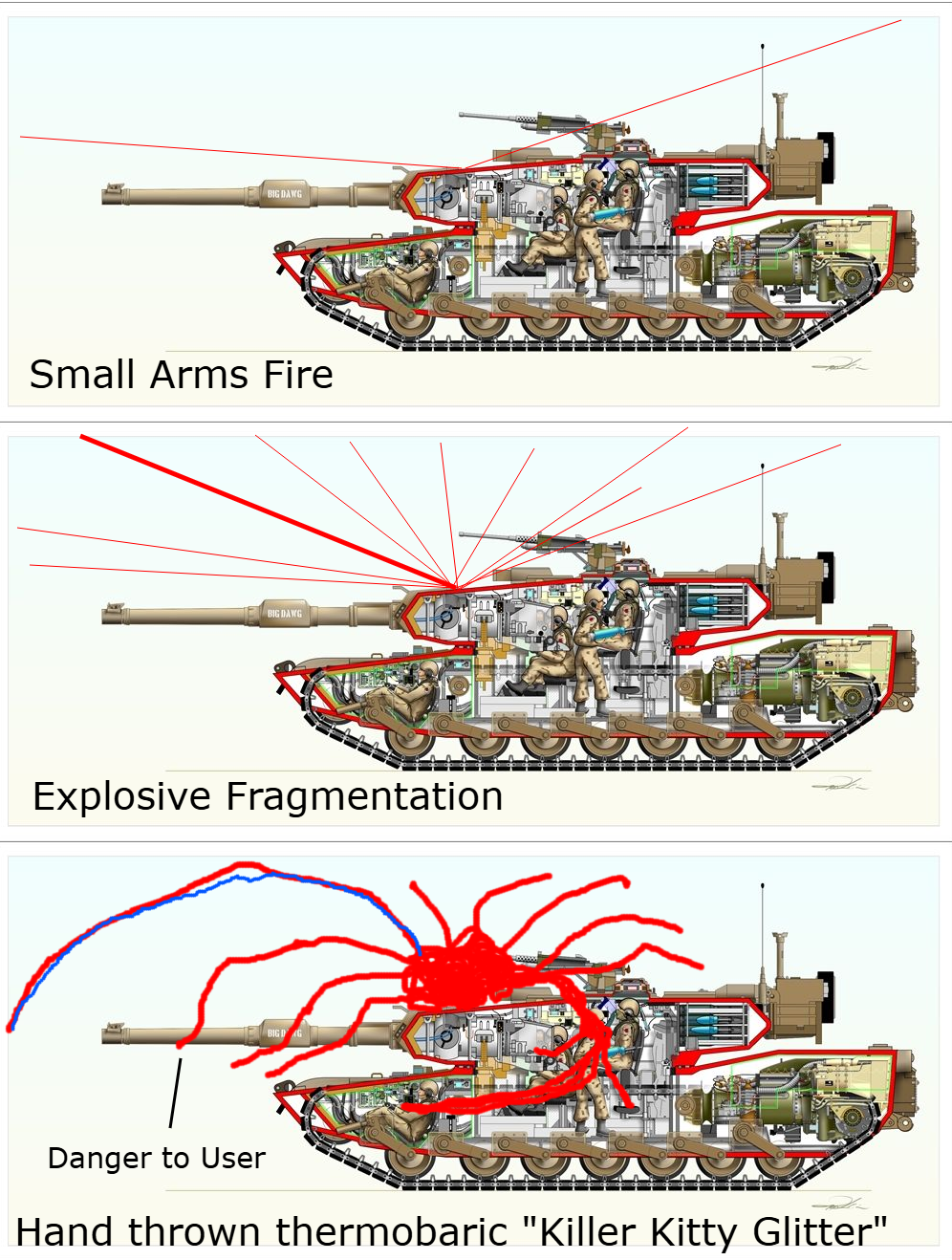
This can obviously burn and maim the Tankers, but even uninjured Tankers will probably have to bail out at this point because the consumption of Oxygen has rendered the crew compartment non-survivable for breathing.
“Oh sure, but come on… Tanks and armored vehicles don’t have the best ventilation, but are they really so air tight?”
Yes actually.
All modern armored vehicles, even your local police force’s BearCat are designed to be at least aggressively watertight to resist molotov cocktails… but many were designed with CRBN (Chemical Radiological Biological and Nuclear) Warfare in mind, and even if the individual models don’t have the dedicated CRBN modules installed to cycle air whilst filtering out Nerve Gas or Fallout… they still often require air exchangers, air conditioners, ect. because the base design is so airtight by default.
Indeed the US Military itself has published a 160 page study on the Occupational Health and Safety Hazards of Operating an M1 Abrams Tank (Archive) Mostly focused on the long term hazards of exposure to various live-fire and engine chemicals in such a confined space.
It includes this gem:
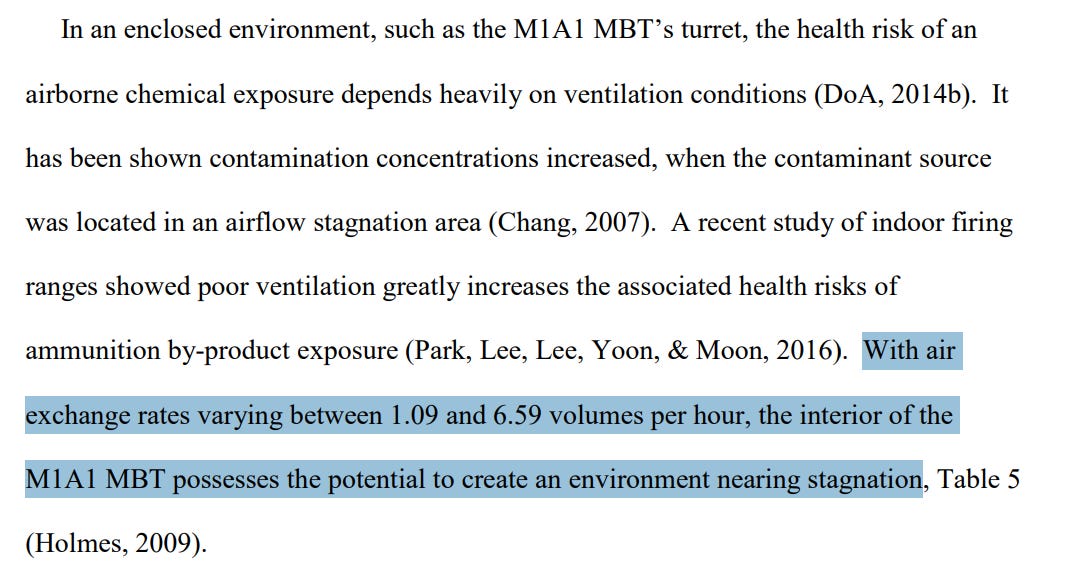
“Air exchange rates varying between 1.09 and 6.59 volumes per hour”
And presumably the M1A1 Abrams is one of the better Main Battle Tanks out there for concern with airflow (Americans spend a lot on them).
.
Hey, These unconventional warfare pieces are always really hit and miss. Some people love them, others are weirded out, and others insist that it is totally inappropriate and that instead I should go back to writing pieces about prepping and resisting government tyranny (•_•). In either case I have ZERO Idea whether this piece will get a good response, or whether I should have paywalled it, or if this will be the thing that gets me a door-knock…
If you appreciate what I do at all or think this is an important contribution to the field of speculative irregular warfare… Please Subscribe. Pretty please? Pretty pretty please?! Like and Restack? Share? Just an Email address or a like goes such a long way to making this viable. And those of you who become paid subscribers I consider the true saints of Future CatGirl Warfare.
This means that if you hit a tank, or get anything in the crew compartment that’s consuming oxygen or releasing merely normal battlefield toxic gasses, or even just set any papers or kit or clothing on fire in there… It is going to take a minimum of nearly 9 minutes for it to be occupiable again by the crew, and likely closer to an hour (depending on what the engine and air settings were at)… That the smoke or choaking unoxygenated gas is going to force them to bail-out (if they can. If they can’t due to injury, getting stuck, confusion, or merely not perceiving the lack of oxygen… well confined spaces deaths have killed many a farmer and sailor in all kinds of different “tanks”) and if they get out they probably can’t get back in the tank if the attackers have any small arms rifle cover over it… Beyond that the hatches are also probably staying open as they bail-out, giving the attacker ample opportunity to get flammable liquids, explosives, Meltatini Thermite, etc. Down the hatch and kill or disable the unoccupied tank either with a cookoff, or merely by burning and destroying the controls and sensors.
The same tight armored metal box that keeps the tankers safe has been weaponized against them.

In Conclusion: Don’t Do This at Home!
”WarCrimes are in the Eye of The Beholder”
.
Now on paper… technically: This is not a warcrime.
(This is maybe the most Canadian sentence I have ever written.)
.
Just as legally: Since Killer Kitty Glitter is chemically and mechanistically less complex than bottled water, and it “releases” negative-gas preassure in a rapid metal-oxidization, thus making it the exact OPPOSITE of an explosion…
I have in NO WAY whatsoever posted bomb-making instructions or diagrams to the internet. (instructions require steps… bombs explode. Diagrams require complexity so as to be simplified… Not one word overlaps with the above)
And I will sue anyone who defames me by saying otherwise.
It’s not a Technicality. It’s Compliance.
.
However, don’t expect any enemy combatant to Approve your nigh-Talmudicly legalistic reading of the Geneva convention. (Enemy combatants don’t answer defamation suits)
Also don’t expect the laws of physics to play nice with you either.
“More Dangerous to User than Enemy.” Repeat that into a mirror.
The purpose of this piece is again to be aware of and predict future threats from unconventional forces… Not to randomly lobotomize yourself with face-melting lung-liquefiers.
.
Sure if carried out perfectly… this is a elementally simple improvised thermobaric weapon just like the US, Russia, Israel, China, Ukraine, and basically every serious military player around the world already uses. And they all insist that their thermobaric weapons are not warcrimes, are not designed to wound or maim, are perfectly humane, and in no-way resemble chemical warfare.
It’s not chemical warfare if the chemicals are on fire.
However, anyone who actually attempts to make these death traps or heaven help them: employ them in actual combat… are eternally one slip and fall, or mis-opened mill, or random cracked bottle, or pouring without a respirator away from having their lungs liquified by aluminum dust contaminants, being lobotomized with Alzheimer’s in their 20s if their own lungs don’t drown them, and most likely melting their own face off when a random element sparks or reacts a little too quickly and exothermically with the open air.
Likewise no military in the world is going to flinch at court-martialing an enemy combatant, or entire captured unit, for Chemical Warfare and Violation of the Geneva Convention if they tried to employ one of these against their enemy… And somehow it didn’t ignite.
If one body or living person could be produced that demonstrably died or got lobotomized or maimed by inhaling Aluminum powder that WASN’T on fire…
Ya, they’re going to string up your entire unit for chemical warfare and they’re going to make a huge media production of it as well.
.
I mean sure, obviously if it HAD ignited, such an unfortunate enemy combatant would have died anyway in a perfectly legal (well… Geneva compliant) 2000 degree face melting and lung devouring fire… But the second one fails to ignite… any enemy you’re dealing with is going to turn it into legal and media circus.
.
Thus such weapons represent maybe the most unstable and infuriatingly unpredictable escalation you could employ against an enemy or that your enemy could employ against you.
Genuinely more dangerous to the user than the enemy, since everything has to go right to actually harm any enemy, but any mistake will kill or maim the user…. And yet so horrifyingly dangerous it still composes a threat to the enemy by shear proximity.
.
As such… I fully expect unconventional forces around the world to do it anyway, because the supply chain of scrap aluminum and bottles is so bloody simple and the effect on any armored target that isn’t airtight or has momentarily opened its hatches is so devastating.
Employed from A dropper Drone or bottle launcher (modified crossbow, or catapult) this is maybe the simplest improvisable weapon that can still be effectively used against armored enemies… With a supply chain that is maybe even less disruptable than Molotov cocktails.
And almost certainly there are people out there in the battlefields of the world suicidally brave enough to hand-throw a thermobaric that ignores cover and which they could never protect themselves from if they misjudged the distance.
(fragmentation grenades are downright user friendly and failsafe by contrast)
.
Many a country has been blockaded of their petroleum and reduced to complete fuel scarcity meaning that even Molotov cocktails can be effectively blockaded to scarcity… by contrast aluminum scraps don’t get consumed and devoured up under conditions of siege… Aluminum is indeed a scrap product of food, beverages, motor vehicles, etc. That largely just sits arround until someone disposes of it.
As long as you can find some sort of electric motor, or even a pedal motor… aluminum scraps can be milled finer by irregular or cut off forces. And as long as you’re near civilization of any sort, you’re going to find aluminum scraps.
.
Expect this to be a staple of future warfare and antiarmor warfare especially.
.
But WAIT! We’re not finished.
Tune in next time for the Third and final installment in the CatGirl Cocktail Hour, when I’ll introduce you to far less dangerous utility “cocktails” meant to give unconventional forces some survivability and lead you through the full promise of this exercise:
A simulated (on paper) ambush of a full Sized tank platoon: 4 Main Battle Tanks + Infantry Screen, by irregular forces to show you how even without a ready supply of conventional heavy weapons an irregular force can still MacGyver, Breaking Bad, and suicidally over-commit their way to…
Some percent chance of a not totally Pyrrhic “Victory”.
Tip:
BITCOIN: bc1qdhj7637sgcssxgxygjaa3ddljwy8tzg5mzw325

MONERO: 8AhA3g9hbtDcAJE5MPmeQsFwwGsf3H9fq9tC6giQ4a6vKnTXv4J4MivKXrPKDpXyEeNc9mfFejbq84kSWkC8pjuj18rAEij

Follow me on Twitter: @FromKulak
BTW if you have any connections in Ukraine or amongst the Kurds or special forces.. It's very important legally/culturally that the first employment of any of these hypothetical tactics be a US ally.
If the first employment is by a US ally... Then I'm a patriot who helped the noble war effort. If it's by an enemy then the scrutiny happens.
Somehow this is the logic of war speculation.
I found this thoroughly enjoyable: Much in the same way that I deeply enjoy cave diving disaster videos. They're so satisfying to fantasise about but I always walk away with the firm conclusion "I never want to do that."